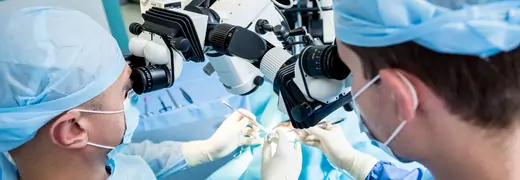
ROLL in Breast Surgery: Precision Technique for Safe and Effective Cancer Treatment
Get Free Medical Opinion
What Is the ROLL Technique?
Modern breast surgery prioritizes two essential goals: accurate cancer removal and the preservation of breast appearance. Many breast lesions—especially those detected through screening programs—are extremely small and non-palpable, meaning they cannot be felt during physical examination but are visible on imaging tests like mammography, ultrasound, or MRI.
To accurately remove these hidden lesions, surgeons rely on minimally invasive localization methods. One of the most advanced and widely adopted techniques is ROLL (Radioguided Occult Lesion Localization).
ROLL combines nuclear medicine with surgical precision, enabling the surgeon to accurately locate and excise non-palpable breast lesions with minimal removal of surrounding healthy tissue. This radioguided approach improves oncologic outcomes, reduces reoperation rates, and maintains superior cosmetic results, making it ideal for breast-conserving surgery.
How the ROLL Technique Works
ROLL is a two-stage but seamless process involving radiologists, nuclear medicine specialists, and breast surgeons.
1. Preoperative Localization
The procedure begins in the radiology department. Under real-time imaging guidance—typically ultrasound or stereotactic mammography—a radiologist injects a tiny amount of radioactive tracer (commonly Technetium-99m labeled human albumin) directly into or next to the suspicious lesion.
This radiotracer remains concentrated at the lesion site, creating a highly detectable radioactivity signal without spreading into surrounding tissue.
Key characteristics:
Minimally invasive: Only a small needle is used.
Highly accurate: The tracer is placed precisely at the target.
Comfortable for the patient: No wires protrude from the breast, unlike traditional wire-guided localization (WGL).
Once injected, the patient is transferred to the surgical suite.
2. Intraoperative Detection
During surgery, the breast surgeon uses a gamma probe, a handheld device that detects low-level radiation. The probe produces audible and numerical signals that guide the surgeon to the lesion.
The radioactivity increases as the probe nears the injected site.
The surgeon interprets these signals to decide the optimal incision site.
Tissue removal becomes extremely precise and controlled.
Because the tracer stays confined to the target lesion, the gamma probe accurately pinpoints the area requiring removal.
3. Precise Surgical Excision
Once the surgeon identifies the lesion using gamma guidance, the tissue is removed with a focus on:
Complete excision of the suspicious area
Minimal removal of surrounding healthy tissue
Better cosmetic outcome compared to older localization systems
After extraction, the surgeon examines the removed specimen with the gamma probe to confirm the radiotracer is entirely within the excised tissue. This step helps reduce the risk of positive margins, which can otherwise require a second surgery.
Why ROLL Is Superior to Traditional Wire-Guided Localization
For decades, non-palpable breast lesions were removed using wire-guided localization (WGL), in which a thin wire protruding from the breast indicated the lesion’s location. While effective, this method had well-known disadvantages:
Patient discomfort due to wire protrusion
Wire displacement risk
Longer surgical times
Less precise localization
Higher reoperation rates
ROLL resolves these issues by replacing the wire with an internal radiotracer.
Key benefits over WGL:
The patient moves and lies down more comfortably.
There is no external device sticking out of the breast.
The surgeon has a clearer three-dimensional understanding of lesion depth.
Lesion-centered incisions provide better aesthetic outcomes.
Reduced stress and improved workflow for both the patient and surgical team.
Studies consistently show that ROLL leads to greater surgical accuracy, shorter operation times, and higher patient satisfaction.
When Is ROLL Used?
ROLL is ideal for early-stage breast cancer, pre-invasive lesions, and suspicious abnormalities found on mammography or ultrasound. It is particularly beneficial in the following cases:
1. Non-Palpable Breast Lesions
Lesions that cannot be felt by hand but are visible on imaging, such as:
Small tumors
Asymmetries
Architectural distortions
Microcalcification clusters (when associated with a target lesion)
2. Ductal Carcinoma In Situ (DCIS)
ROLL helps guide precise removal of DCIS areas identified on mammography.
3. Early Breast Cancer Requiring Breast-Conserving Surgery
ROLL allows accurate tumor excision, preserving as much healthy tissue as possible.
4. Lesions Requiring Histopathological Diagnosis
Suspicious imaging findings can be safely excised when core biopsy is inconclusive.
5. Patients Prioritizing Cosmetic Outcomes
ROLL is especially valuable when optimal cosmetic appearance is desired, as it allows the surgeon to plan the incision strategically.
Advantages of the ROLL Technique
ROLL offers several major advantages for both patients and surgeons:
1. Unmatched Accuracy
The radioactive tracer pinpoints the exact location of the lesion, reducing the risk of incomplete excision or positive margins.
2. Superior Cosmetic Results
ROLL allows surgeons to make smaller and more discreet incisions, preserving breast shape and minimizing unnecessary tissue removal.
3. Lower Patient Discomfort
Unlike wire localization, ROLL involves no external hardware and significantly reduces anxiety and discomfort prior to surgery.
4. Shorter Operating Times
Gamma-guided detection simplifies the intraoperative workflow, reducing surgical duration.
5. Reduced Need for Repeat Surgery
Higher accuracy means fewer cases of residual tumor requiring re-excision.
6. Safer and More Reliable Method
The radiotracer dose is extremely low and considered fully safe for patients.
How ROLL Is Performed at Medical Point Hospital
At Medical Point Hospital, ROLL is performed using a coordinated, multidisciplinary approach involving:
Breast Radiologists
Nuclear Medicine Specialists
Breast Surgeons
Pathologists
Oncology Care Teams
Step-by-step process at Medical Point Hospital:
1. Advanced Imaging and Assessment
The lesion is carefully evaluated using the latest imaging technology—digital mammography, high-resolution ultrasound, or breast MRI.
2. Radiotracer Injection
A tiny amount of radiotracer is injected directly into the lesion with excellent precision.
3. Surgical Localization with Gamma Probe
The surgeon uses the gamma probe to detect the tracer signal and guide the excision.
4. On-Table Specimen Verification
The excised tissue is immediately checked to ensure the lesion has been completely removed.
5. Pathological Examination
The tissue is analyzed for cancer type, margins, and other diagnostic details.
6. Comprehensive Postoperative Follow-Up
Patients are assessed by the oncology team to ensure optimal recovery and further treatment planning if necessary.
This integrated system ensures patient safety, exceptional accuracy, and excellent aesthetic outcomes.
Potential Risks and Considerations
Although ROLL is highly safe, a few minor considerations exist:
Mild discomfort at the injection site
Possible temporary skin redness
Very low-level radiation exposure
Rare allergic reactions to the tracer medication
At Medical Point Hospital, strict safety protocols and modern imaging technology minimize these risks.
Conclusion
ROLL represents one of the most advanced and patient-friendly methods for localizing non-palpable breast lesions. By combining nuclear medicine with precision surgery, ROLL ensures:
Accurate tumor removal
Minimal tissue loss
Improved cosmetic outcomes
Reduced surgical stress
Faster recovery
At Medical Point Hospital, breast cancer care is guided by a commitment to precision, safety, and compassion. Through state-of-the-art techniques like ROLL, patients receive world-class treatment designed to preserve both health and quality of life.
WHAT WE'RE TALKING ABOUT

Life During and After IVF Treatment: What Patients Should Know

Prostate Cancer Treatment in Turkey

Coronary CT Angiography: Advanced Non-Invasive Imaging for Heart and Coronary Artery Health