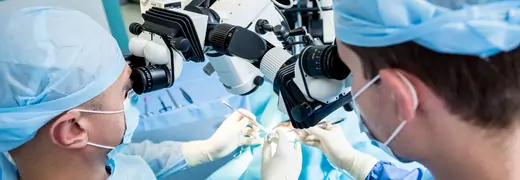
Monitoring and Treatment of Skin Tumors
Request Call Back
Skin tumors are abnormal growths originating from the cells of the skin, which may be benign (non-cancerous) or malignant (cancerous). These tumors can develop from various layers and cell types of the skin. While some grow slowly and remain harmless, others can be aggressive and life-threatening if not detected early.
The most common types of malignant skin cancers include:
- Basal cell carcinoma (BCC): Typically slow-growing and the most common type of skin cancer.
- Squamous cell carcinoma (SCC): May grow more rapidly and can spread if untreated.
- Melanoma: The most aggressive form of skin cancer, often arising from pre-existing moles or pigmented lesions.
Benign skin tumors also include lesions such as lipomas, sebaceous cysts, and seborrheic keratoses, which usually do not pose serious health risks but may require removal for cosmetic or functional reasons.
Risk factors for developing skin tumors include:
- Excessive sun exposure and ultraviolet (UV) radiation
- Fair skin or light eye color
- Genetic predisposition or family history of skin cancer
- Immunosuppression due to medications or medical conditions
- Prolonged exposure to certain chemicals
Understanding these risk factors can aid in early detection and prevention of skin tumors.
Symptoms of Skin Tumors
Skin tumors can appear in a variety of forms, depending on the type, location, and growth pattern. Common signs and symptoms include:
- Changes in color, size, or shape of a mole or lesion
- Non-healing sores that persist for weeks
- Bleeding, crusting, or ulceration of the affected area
- Rapidly growing lumps or nodules on the skin
- Itching, tenderness, or pain
Basal cell carcinoma (BCC) typically presents as a shiny, pearly bump or nodule that grows slowly. It may ulcerate over time but rarely spreads to distant organs.
Squamous cell carcinoma (SCC) is often harder, scaly, or crusted and can grow more rapidly. It carries a higher risk of spreading to nearby lymph nodes if left untreated.
Melanoma is the most aggressive skin cancer. Early signs often involve changes in a pre-existing mole or a new pigmented lesion, with variations in:
- Asymmetry – one half differs from the other
- Border irregularity – edges are not smooth
- Color – uneven pigmentation or multiple colors
- Diameter – typically larger than 6 mm
- Evolution – any noticeable change over time
Skin tumors commonly appear on areas exposed to the sun, such as the face, neck, and arms. Monitoring for new or changing lesions is essential, especially for individuals with high-risk factors.
How Are Skin Tumors Diagnosed?
The diagnosis of skin tumors begins with a thorough clinical examination. A dermatologist or qualified physician evaluates the appearance, texture, and characteristics of the lesion.
1. Clinical Evaluation
- Visual inspection: Observing size, color, shape, and surface changes
- Palpation: Assessing firmness, tenderness, and involvement of underlying tissue
- Dermatoscopy: Using a dermatoscope for magnified, detailed inspection of skin patterns and pigmentation
2. Biopsy and Histopathological Examination
- A biopsy is often required to confirm whether a lesion is benign or malignant
- The tissue sample is analyzed under a microscope to determine the tumor type, grade, and potential for spread
- Biopsy techniques may include punch biopsy, excisional biopsy, or shave biopsy, depending on the lesion’s size and location
3. Advanced Imaging and Staging
- For suspected malignant tumors, imaging studies such as ultrasound, CT, MRI, or PET/CT may be used to assess lymph node involvement or metastasis
- Accurate staging is crucial for planning treatment and determining prognosis
4. Multidisciplinary Approach
- In complex cases, dermatologists may work with oncologists, plastic surgeons, and pathologists to ensure comprehensive care
- Early and accurate diagnosis greatly improves treatment success rates, particularly for aggressive tumors like melanoma
Treatment Approaches
Treatment depends on the type, size, location, and stage of the skin tumor. Common strategies include:
- Surgical Removal
- Excision with clear margins is the most common treatment for localized tumors
- Mohs micrographic surgery is used for tumors in cosmetically sensitive or high-risk areas
- Excision with clear margins is the most common treatment for localized tumors
- Topical or Local Therapies
- Certain superficial BCCs may respond to topical creams such as imiquimod or 5-fluorouracil
- Certain superficial BCCs may respond to topical creams such as imiquimod or 5-fluorouracil
- Radiation Therapy
- Used in cases where surgery is not feasible or as adjuvant therapy for high-risk tumors
- Used in cases where surgery is not feasible or as adjuvant therapy for high-risk tumors
- Systemic Therapy
- Targeted therapy, immunotherapy, or chemotherapy may be required for advanced or metastatic melanoma
- Targeted therapy, immunotherapy, or chemotherapy may be required for advanced or metastatic melanoma
- Regular Monitoring and Prevention
- Patients are advised to monitor skin regularly, perform self-checks, and undergo annual dermatological exams
- Sun protection measures, including sunscreen and protective clothing, are essential to reduce recurrence or new tumor development
- Patients are advised to monitor skin regularly, perform self-checks, and undergo annual dermatological exams
Importance of Early Detection
Early detection of skin tumors dramatically improves outcomes:
- Increased treatment success with less invasive procedures
- Reduced risk of metastasis and recurrence
- Better cosmetic and functional results
- Improved overall survival, particularly in melanoma
Individuals with fair skin, a family history of skin cancer, or significant sun exposure should maintain regular dermatology follow-ups and seek evaluation for new or changing lesions.
MedicalPoint Hospital provides state-of-the-art dermatology services, including skin examinations, dermatoscopy, biopsy, and multidisciplinary treatment planning, ensuring patients receive timely and effective care.
Conclusion
Skin tumors encompass a broad spectrum of benign and malignant lesions, some of which may pose serious health risks if left untreated. Awareness of early signs, regular skin monitoring, and timely evaluation by a specialist are crucial for maintaining skin health. MedicalPoint Hospital offers comprehensive diagnostic and therapeutic options to address skin tumors, improve patient outcomes, and preserve both health and quality of life.
WHAT WE'RE TALKING ABOUT
Life During and After IVF Treatment: What Patients Should Know

Prostate Cancer Treatment in Turkey
Coronary CT Angiography: Advanced Non-Invasive Imaging for Heart and Coronary Artery Health