Nuclear Medicine
Get Free Medical Opinion
Overview
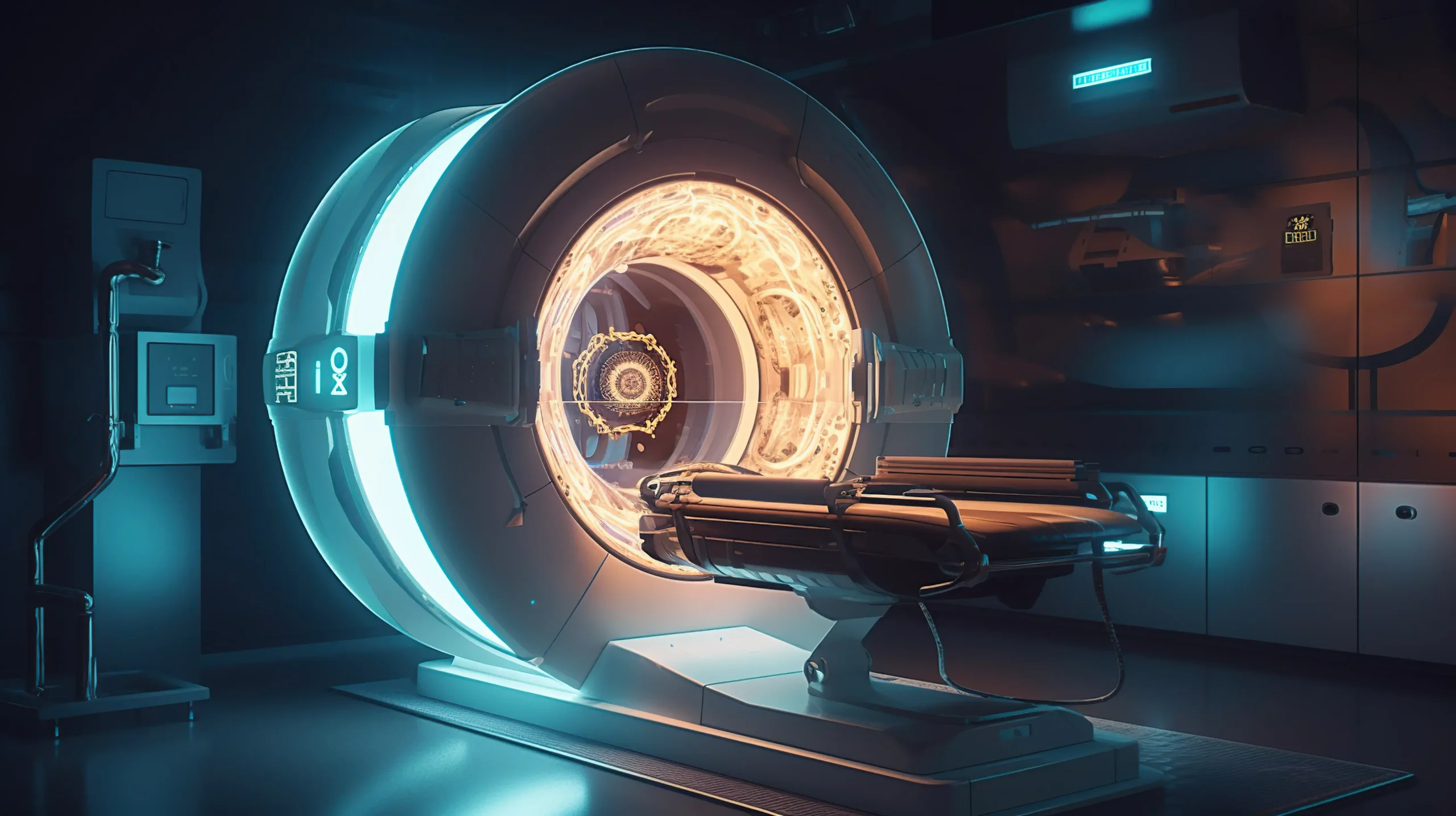
The Nuclear Medicine Department in our hospital specializes in the use of safe, low-dose radioactive materials to diagnose and treat a wide range of diseases. Our expert team applies advanced imaging techniques such as PET-CT and SPECT-CT to evaluate organ function, detect cancers at an early stage, monitor heart diseases, and assess neurological disorders.
In addition to diagnostic imaging, our department also provides targeted nuclear therapies, including treatments for thyroid disorders, certain types of cancer, and bone pain caused by metastasis. With a patient-centered approach and state-of-the-art technology, we ensure accurate diagnosis, effective treatment, and close follow-up care.
Treatment Methods
Nuclear Medicine Departments of MEDICALPOINT INTERNATIONAL HOSPITAL are able to image infections and inflammations in cardio-vascular system, skeletal system, thyroid, parathyroid, genito-urinary system, tumor, pulmonary system and central nerve system and also to perform C-14-Urea Breathe Test and intra-operative sentinel node biopsy procedures.
Moreover, leukocyte-labeled whole body scintigraphy can also be scanned in our Nuclear Medicine Departments.
PET (Positron Emission Tomography) imaging is mostly used for diagnosis and follow-up of cancers and diseases of central nervous system and cardio-vascular system. A PET scan detects metabolic changes in cancer cells using a radioactive tracer, called FDG. Thus, information is gained regarding the stage of diseases and the risk of recurrence.
Scintigraphy and SPECT
There are two types of imaging in nuclear medicine. Functional imaging performed with a gamma camera after a radioactive substance is administered to the body, usually intravenously or orally, is called “scintigraphy”. Scintigraphy examines the retention, distribution and excretion of the drug in the relevant organ by administering a different radioactive drug for each organ to be examined (such as thyroid, parathyroid, heart, kidney, bone, tear duct, reflux, testicular, Meckel, lung scintigraphy, lymphoscintigraphy). In necessary cases, SPECT (Single Photon Emitting Computerized Tomography) imaging can be performed to obtain three-dimensional tomographic images of these areas.
Gallium 68 (Ga-68)
Gallium 68 is a nuclear medicine agent used in imaging prostate cancer and endocrine tumors (Gallium-PET) at Nuclear Medicine Departments of MEDICALPOINT INTERNATIONAL HOSPITAL. A PET-CT scan is run that lasts for 20 minutes, after Gallium-68 isotope is intravenously administered to the patient and 60-minute uptake phase elapses.
Iodine Unit
Iodine unit used radioactive iodine therapy to manage thyroid cancers in Nuclear Medicine Departments of MEDICALPOINT INTERNATIONAL HOSPITAL. The unit has two patient rooms that are coated with lead for safety of patients and staff. Rooms are monitored by a nurse from a camera throughout the treatment period. Patients can call nurses and seek information, whenever they want. Nurses check patients by visiting the room at certain intervals. Nobody is allowed to these rooms, excluding the assigned nurse and physician.
-
Actinium 225 PSMA Treatment
-
Actinium Treatment
-
Droid CA Treatment
-
I-BI Treatment
-
Lu-177 DOTATATE Treatment
-
Lu-177 EDTMP
-
Lu-177 PSMA Treatment
-
Lutetium Treatment
-
NET Treatment
-
Phosphorus 32 Treatment
-
Radioactive Iodine Treatment
-
Radium 223 Treatment
-
Radium Therapy
-
TARE Treatment
-
Transarterial Radionuclide Therapy with Y-90 Microspheres
FAQ
Nuclear medicine is a medical specialty that uses small amounts of radioactive substances (radiopharmaceuticals) to diagnose and treat various diseases. It provides functional imaging that shows how organs and tissues work—not just how they look—offering early and accurate detection.
Our department performs a variety of advanced nuclear medicine tests and treatments, including:
Bone scintigraphy (bone scan)
Thyroid scan and uptake test
Cardiac stress perfusion imaging (SPECT)
Lung perfusion/ventilation scan
Renal scintigraphy
PET/CT scans for oncology, neurology, and cardiology
Sentinel lymph node mapping for cancer surgery
Radioiodine therapy for hyperthyroidism and thyroid cancer
Lutetium-177 and Actinium-225 targeted therapies (e.g., Lu-PSMA, Lu-DOTATATE)
Yes. The amount of radiation used is very small and comparable to, or often less than, a CT scan. Radiopharmaceuticals are carefully selected and administered under strict safety protocols by certified nuclear medicine physicians and technologists.
A radiopharmaceutical is injected, swallowed, or inhaled depending on the type of test. It travels to the target organ, and a special camera (gamma camera or PET scanner) detects the radiation emitted to create functional images of the body.
Preparation depends on the test. Some scans require fasting, hydration, or stopping certain medications. Our team will provide detailed instructions before your appointment.
A PET/CT scan combines positron emission tomography (PET) with computed tomography (CT) for highly detailed images. It is commonly used for:
Cancer diagnosis, staging, and treatment follow-up
Brain disorders (e.g., epilepsy, Alzheimer’s)
Cardiac viability assessment
Yes. Nuclear medicine is used to treat certain conditions, such as:
Radioactive iodine (RAI) therapy for thyroid diseases
Peptide receptor radionuclide therapy (PRRT) for neuroendocrine tumors
Targeted radionuclide therapy for prostate cancer and bone metastases
These treatments deliver radiation directly to diseased tissues, minimizing damage to healthy cells.
Most diagnostic scans are outpatient procedures. Some treatments, such as high-dose radioiodine therapy, may require a short inpatient stay for radiation safety reasons. Our team will inform you in advance.
DOCTORS



WHAT WE'RE TALKING ABOUT

Weight Loss and GLP-1 Therapy: A Modern Approach to Sustainable Weight Management
Life During and After IVF Treatment: What Patients Should Know

Prostate Cancer Treatment in Turkey