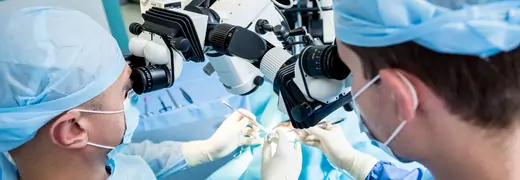
Aortic Aneurysm Surgeries
Request Call Back
What Is an Aortic Aneurysm?
An aortic aneurysm is a serious medical condition in which a section of the aorta — the body’s largest artery — becomes abnormally enlarged or ballooned due to a weakening in its wall. The aorta carries oxygen-rich blood from the heart to every part of the body, and any compromise in its structure can have critical consequences.
When part of the aortic wall weakens, blood pressure inside the artery pushes against it, causing the wall to bulge outward. Over time, this weakened area may continue to stretch and enlarge, increasing the risk of aortic rupture or dissection (tearing of the artery wall) — both of which can lead to severe internal bleeding and can be life-threatening emergencies.
Aortic aneurysms can develop in different regions of the aorta:
- Thoracic aortic aneurysm (TAA): Occurs in the chest region.
- Abdominal aortic aneurysm (AAA): Develops in the abdominal section of the aorta and is the most common form.
- Thoracoabdominal aortic aneurysm: Extends through both chest and abdominal areas.
While many aneurysms remain small and asymptomatic for years, early detection is essential. Once the aneurysm reaches a certain size or begins to grow rapidly, the risk of rupture increases dramatically — making timely diagnosis and treatment critical for survival.
Causes and Risk Factors of Aortic Aneurysm
The exact cause of an aortic aneurysm often involves a combination of genetic, structural, and lifestyle factors. The most common underlying cause is atherosclerosis, or hardening of the arteries, which weakens the vessel walls over time. However, several other risk factors can contribute:
1. High Blood Pressure (Hypertension)
Consistently elevated blood pressure puts stress on artery walls, gradually damaging the inner lining and contributing to the formation and growth of aneurysms.
2. Atherosclerosis (Plaque Buildup)
Cholesterol and fat deposits accumulate on arterial walls, making them stiffer and weaker, especially in older adults.
3. Genetic Predisposition
Certain inherited conditions — such as Marfan syndrome, Ehlers-Danlos syndrome, and Loeys-Dietz syndrome — affect connective tissue strength, predisposing individuals to aneurysm formation even at younger ages.
4. Smoking
Smoking is one of the most significant preventable causes of aortic aneurysms. It accelerates plaque buildup, increases blood pressure, and directly damages the vessel wall, raising the risk of both formation and rupture.
5. Age and Gender
Men over the age of 65 are more likely to develop abdominal aortic aneurysms, although women tend to face a higher risk of rupture once an aneurysm forms.
6. Infection or Inflammation
In rare cases, infections such as syphilis, salmonella, or tuberculosis can weaken the aortic wall (a condition known as a mycotic aneurysm). Chronic inflammatory diseases can also contribute.
7. Trauma
A severe chest or abdominal injury — such as from a car accident — can damage the aorta and trigger aneurysmal changes later.
Symptoms of Aortic Aneurysm
Aortic aneurysms are often called “silent threats” because most develop without causing any symptoms until they become large or rupture. However, certain warning signs may appear depending on the aneurysm’s location:
Abdominal Aortic Aneurysm (AAA)
- A pulsating feeling near the navel or lower abdomen
- Deep, constant pain in the abdomen or lower back
- Abdominal tenderness or discomfort when touched
Thoracic Aortic Aneurysm (TAA)
- Chest or upper back pain, sometimes radiating to the neck or shoulders
- Shortness of breath or difficulty breathing
- Coughing or hoarseness, caused by pressure on nearby airways
- Difficulty swallowing due to compression of the esophagus
When an Aneurysm Ruptures
A ruptured aortic aneurysm is a medical emergency that requires immediate attention. Symptoms may include:
- Sudden, severe, tearing pain in the chest, abdomen, or back
- Dizziness or fainting (due to internal bleeding)
- Rapid heartbeat and low blood pressure
- Loss of consciousness
Without prompt surgical treatment, rupture can quickly lead to shock or death.
How Is an Aortic Aneurysm Diagnosed?
Because most aortic aneurysms are asymptomatic, they are often discovered incidentally during routine medical exams or imaging for other conditions. At Medical Point Hospital, our cardiology and radiology teams use advanced imaging technologies for accurate detection and monitoring.
1. Abdominal Ultrasonography
A noninvasive, painless test that uses sound waves to visualize the abdominal aorta. It is the gold standard screening tool for abdominal aortic aneurysms, especially in men over 65 with a history of smoking.
2. Computed Tomography (CT) Scan
CT angiography provides highly detailed cross-sectional images of the aorta, allowing physicians to measure aneurysm size and shape precisely. It is often used to plan surgical or endovascular treatment.
3. Magnetic Resonance Imaging (MRI)
MRI and MRA (Magnetic Resonance Angiography) offer excellent visualization of soft tissues and are particularly valuable for assessing thoracic aortic aneurysms without radiation exposure.
4. Echocardiography
A heart ultrasound that can identify aneurysms near the aortic root or ascending aorta, often used when patients have heart valve disorders.
5. Physical Examination and Risk Assessment
In some cases, a physician may detect a pulsating abdominal mass during an exam. Family history, smoking habits, and blood pressure readings are also assessed to determine the risk profile.
Treatment Options for Aortic Aneurysm
The goal of treatment is to prevent rupture by managing the aneurysm before it reaches a dangerous size. Treatment depends on the aneurysm’s size, location, growth rate, and the patient’s overall health.
1. Watchful Waiting (Monitoring)
- Small, stable aneurysms (less than 5 cm in diameter) may be monitored with regular imaging every 6–12 months.
- Lifestyle modifications such as quitting smoking, controlling blood pressure, and maintaining healthy cholesterol levels are strongly recommended.
2. Medication Management
- Antihypertensive drugs (e.g., beta-blockers or ACE inhibitors) help reduce stress on the aortic wall.
- Statins may be prescribed to manage cholesterol and reduce atherosclerosis progression.
- These medications do not shrink aneurysms but slow their growth and reduce complications.
3. Surgical Treatment
When the aneurysm reaches a critical size (usually ≥5.5 cm) or grows rapidly, surgical repair is recommended to prevent rupture.
a. Open Surgical Repair
- Involves replacing the weakened portion of the aorta with a synthetic graft.
- Performed under general anesthesia and offers long-term durability.
- Requires a longer recovery period.
b. Endovascular Aneurysm Repair (EVAR/TEVAR)
- A minimally invasive alternative where a stent-graft is placed through a catheter inserted via the femoral artery (in the groin).
- Shorter hospital stay, faster recovery, and fewer complications.
- Requires periodic imaging follow-up to ensure proper placement and sealing.
At Medical Point Hospital, both open and endovascular repair procedures are performed by experienced cardiovascular and vascular surgeons, supported by state-of-the-art imaging and intensive care facilities.
Prevention and Lifestyle Management
While some risk factors for aortic aneurysms — such as age and genetics — cannot be changed, many preventive steps can significantly reduce risk:
- Quit smoking: The most important lifestyle change to prevent aneurysm growth.
- Manage blood pressure: Regular monitoring and medication adherence are key.
- Eat heart-healthy foods: A diet rich in fruits, vegetables, lean proteins, and whole grains supports vascular health.
- Exercise regularly: Low-impact physical activity improves circulation and reduces stress on arteries.
- Regular check-ups: Especially for those with a family history of aneurysm or cardiovascular disease.
Conclusion
An aortic aneurysm is a potentially life-threatening condition that often develops silently but can have devastating consequences if left untreated. Fortunately, with modern diagnostic tools, minimally invasive surgical techniques, and expert cardiovascular care, the outlook for patients has improved significantly.
At Medical Point Hospital, our multidisciplinary team of cardiologists, radiologists, and vascular surgeons is committed to providing personalized screening, early diagnosis, and advanced treatment for all forms of aortic aneurysm.
If you experience chest, back, or abdominal pain, or belong to a high-risk group, schedule a screening today — because early detection can save lives.
WHAT WE'RE TALKING ABOUT

Weight Loss and GLP-1 Therapy: A Modern Approach to Sustainable Weight Management
Life During and After IVF Treatment: What Patients Should Know

Prostate Cancer Treatment in Turkey